Credit
Credit cards used properly
They are either free short-term credit with useful protections, or one of the most expensive borrowing products available.
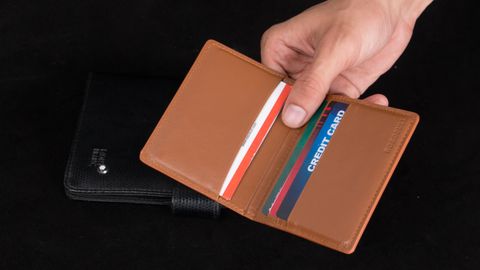
A credit card is two entirely different products depending on whether the balance is cleared each month.
Cleared in full
What the card is when used this way.
An interest-free period of up to around eight weeks depending on the statement cycle.
Purchase protection, which in several jurisdictions makes the card issuer jointly liable with the retailer for goods and services above a threshold — genuinely valuable for large purchases, failed traders and holidays.
Chargeback rights, which apply more broadly including to debit cards but are generally easier to pursue on credit.
Fraud protection, since the money is the issuer's rather than yours while disputed.
Rewards or cashback, which are worth a small percentage.
And a payment record that builds credit history.
Used this way it is a free product with real benefits.
Carrying a balance
Where it becomes expensive.
Representative rates on standard cards are high, and store cards higher still.
Interest is generally charged from the transaction date once a balance is carried, which means the interest-free period disappears entirely rather than applying to new purchases.
Minimum payments are structured so that clearing a balance by paying them takes many years and costs a multiple of the original amount — statements in many jurisdictions are now required to illustrate this.
And the psychological effect of a minimum payment is to anchor repayment at the lowest possible figure.
The practical rules
If you use one.
Set up a direct debit for the full balance, not the minimum, which removes the decision and guarantees no interest.
Never use it for cash withdrawals, which attract fees and interest immediately with no interest-free period.
Understand that some transactions are treated as cash — gambling, currency purchase and some payment services.
Keep utilisation low, which affects credit scoring.
Check the statement for transactions you do not recognise.
And treat the limit as irrelevant rather than as available money.
Zero per cent offers
Useful and requiring discipline.
Balance transfer offers move existing debt to a card at zero or low interest for a period, usually for a transfer fee.
They are genuinely valuable for clearing expensive debt, provided the balance is cleared before the promotional period ends and no spending is added to the card.
Purchase offers provide interest-free spending for a period.
The traps: reverting to a high rate at the end, which catches people who did not divide the balance by the number of months; making a late payment, which frequently ends the promotional rate; and treating the offer as free money rather than as a repayment window.
Divide the balance by the months available, set that as the standing payment, and set a reminder before the deal ends.
Rewards and cashback
Worth having and not worth chasing.
Typical rates are low single-digit percentages, and premium cards charge annual fees that require substantial spending to justify.
Rewards are worthless if any interest is paid, since a single month of interest exceeds a year of cashback for most people.
And research consistently finds that card use increases spending relative to cash, which means chasing rewards by spending more is straightforwardly negative.
Use a rewards card for spending you would do anyway, cleared in full.
Buy now pay later
Worth including because it functions as credit.
It is credit, whatever the marketing, and missed payments carry fees and in many markets are now reported to credit agencies.
Regulation has been tightening in several jurisdictions, with affordability checks being introduced.
The behavioural evidence is consistent: it increases spending and basket size, which is why retailers offer it.
Multiple concurrent agreements are difficult to track, which is the main practical problem.
And it does not offer the purchase protections that credit cards do in many jurisdictions.
Overdrafts
Frequently more expensive than assumed.
Following regulatory reform in several markets, overdraft rates are now comparable to or higher than credit card rates, having previously been obscured by fee structures.
Which means a persistent overdraft is expensive borrowing, and moving it to a cheaper form or clearing it is worthwhile.
Unarranged overdraft charges have been restricted in some jurisdictions and remain costly.
If you already have a balance
Practical steps.
Stop using the card for new spending.
Pay more than the minimum, and fix the payment rather than letting it fall as the balance does.
Consider a balance transfer if you can obtain one and will clear it in the period.
Ask the issuer for a lower rate, which they sometimes grant.
If you are in difficulty, tell them, since regulated lenders have obligations and available measures.
And get free debt advice if the minimums are unaffordable, which is available and does not cost anything.
General information only, not financial advice. Terms and protections vary by country — read your agreement and contact a free debt advice service if you are struggling.